
There's nothing quite like escaping for a few days of camping. Fresh air, crackling campfires, a sky full of stars, and absolutely no emails demanding your attention. Bliss.
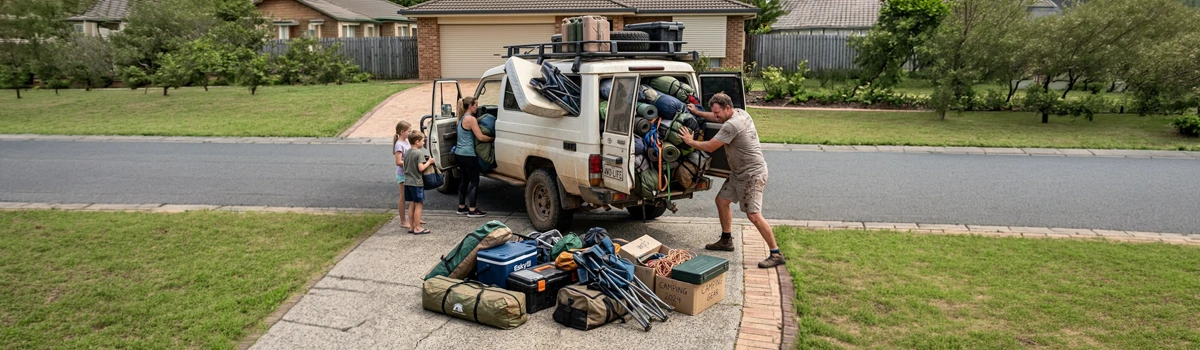
Packing, however, can sometimes feel like you're preparing for a six-month expedition instead of a weekend away.
The good news? You don't need to pack everything you own. After years of camping (and forgetting plenty of things along the way), we've worked out what really matters.
Here's our guide to packing for a short camping trip.
Your Tent – Bigger Isn't Always Better... But It Helps
The right tent comes down to your camping style and how many people are sleeping in it.
A "4-person" tent might technically fit Mum, Dad and two kids, but that's assuming you're all happy sleeping like sardines.
We use a four-person tent for just the two of us, and we wouldn't have it any other way. Our self-inflating mattresses take up a fair bit of room, and it's nice to have space around the edges for shoes, torches, toilet paper, books and all those little bits and pieces that somehow multiply once camp is set up.
If swags are more your thing, the same principles apply—just make sure you've got the bedding and insulation to suit the conditions.
Your Sleep System – A Good Night's Sleep Is Worth Its Weight in Gold
A comfortable bed can be the difference between waking refreshed or wondering whether sleeping on rocks was really such a good idea.
We use Dune 3D self-inflating mats, and rather than a double mattress, we prefer two singles. They're incredibly comfortable, easier to transport, and if one ever develops a leak, you've still got another mattress instead of spending the night on the ground.
One of the cheapest upgrades we've ever made is placing yoga mats underneath our mattresses.
Despite the fancy-sounding "under-mattress insulation", it's really just a couple of inexpensive yoga mats.
They do two important jobs:
-
They help protect your mattress from sharp sticks or stones that might work their way through the tent floor.
-
They insulate you from the cold, damp ground.
That extra layer keeps you warmer during winter, cooler during summer and helps stop moisture creeping into your bedding.
Not bad for something that costs less than a takeaway dinner.
Bedding – Camp Comfort Is Personal
Everyone sleeps differently.
Some campers swear by sleeping bags. Others (like us) like to make the tent feel a bit like home with fitted sheets, blankets and a proper quilt.
Neither is right or wrong.
If you're using sleeping bags, just make sure they're comfort-rated for the temperatures you're expecting—not the survival rating printed in huge letters on the packaging!
Camp Kitchen – Where the Magic Happens
Let's be honest...
Camping meals always seem to taste better.
Whether you're cooking on a gas stove or over a campfire, make sure you've packed the basics:
-
Frypan
-
Pot
-
Kettle
-
Cooking utensils
-
Plates, bowls and cutlery
-
Chopping board and knife
-
Dishwashing gear
Don't forget enough gas for your stove if you're not cooking over fire.
If you are planning on using a campfire, check local fire restrictions before you leave. Total Fire Bans and National Park regulations can quickly change your dinner plans.
Think about where your firewood is coming from too. Some places allow collection, others don't, and after rain it's surprisingly difficult to find dry timber.
Finally—and this is one we've learned the hard way—always carry both a lighter and waterproof matches.
Lighters run out of gas.
Matches get wet.
Murphy's Law says whichever one you've packed by itself will fail five minutes before dinner.
Stocking the Pantry
A simple pantry makes camping easy.
Tinned foods are brilliant because they don't need refrigeration and they're ready whenever you are.
Some of our favourites include:
-
Baked beans
-
Spaghetti
-
Creamed corn
-
Pasta side dishes
-
Instant noodles
-
Soup
Microwave rice deserves a special mention.
No, we're not suggesting you pack a microwave.
Those little packets of pre-cooked rice can simply be stirred into a hot meal and they're ready in minutes.
If you're cooking pasta, angel hair is our pick because it cooks incredibly quickly and works with almost any meal.
Then come the camping essentials:
-
Tea
-
Coffee
-
Hot chocolate or Milo
-
Salt and pepper (a combined grinder saves space)
-
Tomato sauce or BBQ sauce
-
Olive oil
And of course... snacks.
Camping and snacks go together like mozzies and citronella.
Pack a mix of sweet and savoury options like Jatz, Milk Arrowroot biscuits, muesli bars, nuts and maybe a block of dark chocolate for dessert around the campfire.
You've earned it.
The Fridge
Your fridge setup will depend on your camping style.
We run ours from a second battery and recently upgraded to a dual-zone fridge/freezer, giving us plenty of flexibility.
Whatever your setup, make sure you pack the basics:
-
Milk (remember long-life milk still needs refrigeration once opened)
-
Butter or margarine
-
Meat or your preferred protein
-
Cheese
-
Fresh fruit
-
Salad ingredients
-
Vegetables
A few fresh ingredients make a huge difference after a couple of days living on baked beans and noodles.
Water – Take More Than You Think You'll Need
Water isn't just for drinking.
You'll need it for:
-
Cooking
-
Washing dishes
-
Making coffee
-
Cleaning yourself (yes, occasionally that's recommended)
Always carry enough water or have a reliable way of purifying more.
Crystal-clear rivers aren't always as clean as they look.
There might be a decaying wallaby upstream...
...or your mate Dave decided that particular bend in the river was the perfect toilet while you weren't looking.
A quality water filter is cheap insurance against spending your camping trip regretting your life choices.
Lighting – Because Campsites Get Properly Dark
The glow of a campfire is magical.
Until you need to find the toilet at 2 am.
Take a few different lighting options:
-
Head torch
-
Camp lantern
-
Small lantern for inside the tent
If you're buying a head torch, choose one with both a white and red light mode.
The red light preserves your night vision and is far kinder to everyone else around camp.
Trust us.
Nobody enjoys being accidentally interrogated by a 1,000-lumen spotlight while they're trying to enjoy a quiet conversation.
The Essentials
Sooner or later, nature calls.
Always carry toilet paper—even if the campground has toilets.
Having toilets doesn't necessarily mean they'll have toilet paper.
A small shovel is also worth packing.
If you're bush camping and need to dig a toilet hole, make it at least 30 cm deep and well away from campsites and waterways.
When you're finished:
Bury everything that naturally decomposes.
Take everything else home.
Toilet paper will break down.
Wet wipes, nappies and sanitary products won't.
Leave no trace.
Toiletries
Camping doesn't mean abandoning basic hygiene.
Pack:
-
Toothbrush
-
Toothpaste
-
Deodorant
-
Soap
-
Sunscreen
-
Insect repellent
If makeup is part of your daily routine, you certainly don't need the entire bathroom cabinet.
A tinted moisturiser with sunscreen, lip balm and a few basics are usually plenty.
And if you need period products, remember they must always be packed out with your rubbish.
Clothing – Pack Less Than You Think
Here's our favourite packing tip.
Lay out everything you think you'll need.
Now put half of it back.
Seriously.
Most campers wear the same comfortable clothes for several days anyway.
Just make sure you've packed enough layers for changing weather.
At a minimum we'd recommend:
-
T-shirts
-
Shorts
-
Warm jumper
-
Good jacket
-
Hat
-
Socks
-
Plenty of underwear
Don't halve the underwear.
That's one rule we don't recommend breaking.
Tracksuit pants also make excellent winter pyjamas and double as an extra set of clothes if needed.
Rubbish – Leave It Better Than You Found It
One of the golden rules of camping is simple:
If you packed it in, pack it out.
Many campsites don't have bins, so bring plenty of rubbish bags.
FOGO bags are surprisingly handy for smaller amounts of rubbish because they're compact, easy to tie off and fit neatly into a larger garbage bag.
Before you leave, have one last walk around your campsite.
Pick up every scrap.
If we all leave campsites exactly as we found them—or even better—the incredible places we enjoy today will still be there for the next campers to enjoy.
Happy camping, and may your coffee always be hot, your campfire stay lit, and your tent remain dry.