

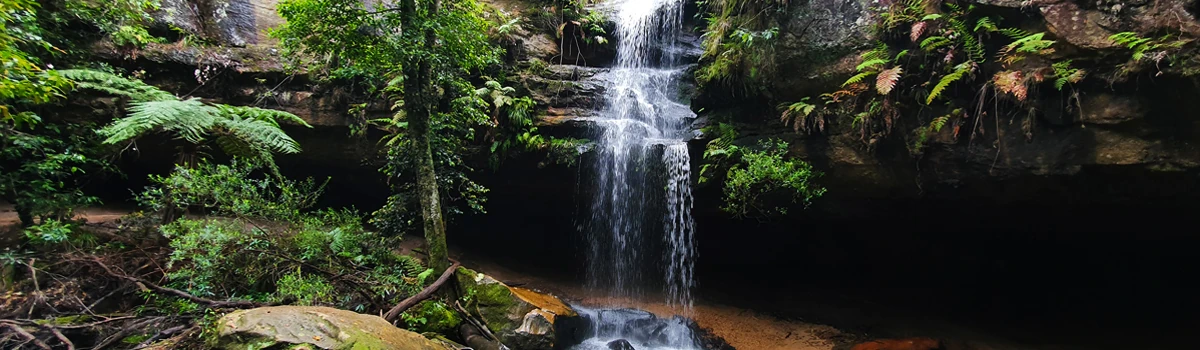
Horseshoe Falls are one of the highlights of the Hazelbrook waterfall circuit and are equally impressive during daylight and after dark. The waterfall spills across the curved edge of a broad sandstone amphitheatre, dividing into numerous ribbons of water before dropping into the sheltered hollow below.
With a good but not excessive flow, the many separate cascades create a beautiful layered effect and provide excellent opportunities for long-exposure photography. The enormous sandstone overhang behind the falls is just as impressive as the waterfall itself, allowing visitors to walk beneath the cliff and view the water from behind.
The waterfall is also known as Lyrebird Falls, although the older Horseshoe Falls name remains widely used. It is easy to understand why when you see the curved shape of the surrounding cliff and overhang.
Horseshoe Falls are among the easier waterfalls to reach on this circuit and are suitable for families and children accustomed to bushwalking. The track can become muddy after rain, while the rocks around and beneath the falls are extremely slippery, so care is still required.
There are several places from which to enjoy and photograph the waterfall. You can explore the sandy floor of the amphitheatre, walk behind the falling water or view the cascades from different positions around the pool. Conditions permitting, standing beneath the waterfall can also provide a refreshing escape on a warm day, but check the water depth and footing carefully before entering.
Stone steps on the right-hand side of the falls, when facing the waterfall, climb beneath the overhang and reconnect with the tracks above. This route also provides access to the three sections of Glow Worm Nook Falls, which make a worthwhile addition to the walk.
Although the reserve can be peaceful during quieter periods, Horseshoe Falls are now a popular destination, particularly on weekends, after rain and at night when people come looking for glow-worms.
After sunset, small blue-green lights may become visible across the damp sandstone behind the falls. Switch off bright torches and allow several minutes for your eyes to adjust to the darkness. Avoid shining lights directly onto the glow-worms, touching the rock walls or using flash photography, as disturbance can interfere with their feeding.
Take time to stand quietly beneath the overhang, listen to the water falling into the amphitheatre and enjoy one of Hazelbrook’s most atmospheric natural locations. During the warmer months, insect repellent is also highly recommended.
Gallery