

The Darling River Run is one of the most iconic outback treks in New South Wales — a legendary route that follows the meandering Darling (Baaka) River through the heart of the far west. It’s a journey steeped in history, rich with characters, and brimming with that unmistakable outback spirit that makes you feel a million miles from anywhere.
For many, this trek is a rite of passage — a favourite among caravanners, campers, and 4WD travellers looking to connect with Australia’s real inland soul. And while many tackle it with the comforts of a van in tow, we decided to do it old-school — just a tent, a 4WD, and the open road.
Setting Off from Bourke
Bourke marks the northern gateway to the Darling, and it’s impossible to miss the sense of history here. Once one of the busiest river ports in the country, Bourke was the point where paddle steamers would load wool and goods bound for Adelaide and beyond.
We started our trek at the Bourke Wharf, where we checked out the massive 100-year-old Crossley oil-fuelled stationary engine, built in 1923, now proudly displayed beside the river. Once used to power the town’s water supply, it’s a wonderful reminder of early 20th-century engineering and the crucial role Bourke played in the region’s development. From there, we called into the Back O’ Bourke Information Centre for a dose of history and a few last bits of local knowledge before heading south. The displays there are top-notch — full of stories about river life, the paddle-steamer era, and the colourful characters that helped shape this part of NSW.
From Bourke, we took the Louth Road, which follows the east bank of the Darling River — a well-travelled outback route winding past remote stations, open red-earth plains, and occasional glimpses of the river through the gums. Gundabooka National Park lies not far south of town, and if you’ve got time, it’s well worth the detour — the red sandstone cliffs, Aboriginal rock art and walking trails make it one of the standout parks in western NSW.
Louth – Small Town, Big Story
Our first proper stop was Louth, a tiny village that punches well above its weight in outback character. We dropped into Shindy’s Inn — one of those legendary bush pubs that feels like the centre of the universe out here. A cold drink, a chat with the locals, and you’re immediately part of the story.
At the Louth Cemetery stands one of the Darling’s most moving sights — the Celtic cross memorial to Mary Mathews, built by her husband Thomas in 1886. Around sunset the polished granite can glow for a few minutes, catching the last light of day. And on 19 August each year — the anniversary of Mary’s death — that glow is perfectly aligned toward the site of their former front door. It’s a simple, powerful tribute that still draws visitors today, more than a century later.
Tilpa – Pub, River, and Outback Soul
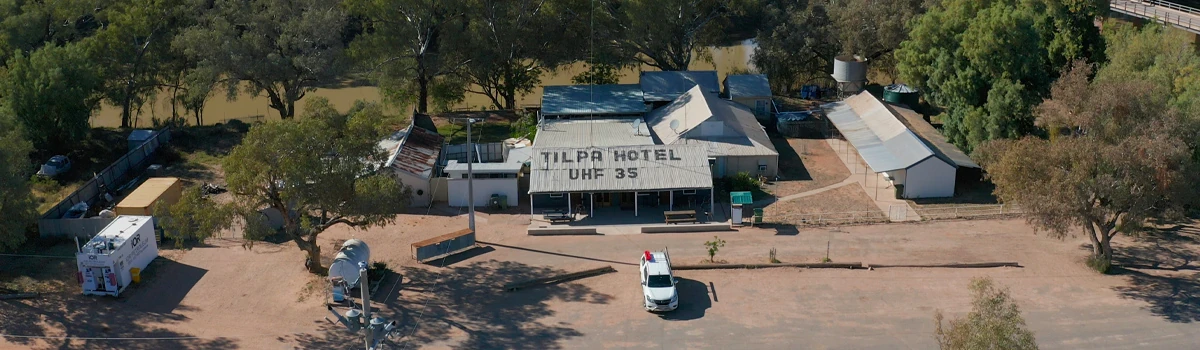
From Louth, the dusty red road leads to Tilpa, another tiny but iconic Darling River town. We camped at the free riverside camp opposite the Tilpa Pub, pitched the tent, and wandered over for dinner. The Tilpa Pub is everything you hope an outback pub will be — corrugated iron, graffiti-covered walls, friendly faces, and a big heart.
Like travellers before us, we made a donation to the Royal Flying Doctor Service and added our names to the pub walls — a long-running tradition that stretches back decades. Free showers at the nearby rest area made it a perfect overnight stop. Bonus points if you can find where we signed!
Next morning, we took a short backtrack to Tilpa Weir. The Darling was running high, so the weir itself was underwater, but the free camp beside it was dry, peaceful, and a cracking bush spot right on the riverbank.
Wilga, Wilcannia and the Heart of the Darling
Continuing south, the scenery opened wide — endless plains, red gums, and glimpses of the river as it twists through the land. We stopped for a cuppa at the Coach and Horses Campground in Paroo-Darling National Park, part of the old Wilga Station. It’s a recently upgraded NPWS riverside campground, beautifully maintained and perfectly placed for those wanting a quiet night on the river.
Rolling into Wilcannia, you can feel the history. Once a thriving inland port and at one stage one of the largest river ports in Australia, Wilcannia was the beating heart of the Darling paddle-steamer trade. Its sandstone buildings still tell the story — the 1880 Post Office, 1883 Athenaeum, the old courthouse, and the historical centre-lift bridge that once allowed steamers to pass below.
We grabbed an excellent coffee and lunch at Wilcannia Café 2836 on Reid Street — a fantastic little spot with great food and warm hospitality — before heading off for the final leg of the trek.
The Road to Menindee Lakes
Leaving Wilcannia, we continued south on the West Wilcannia Road — the main unsealed route to Menindee Lakes. The road winds past open country and old station gates, with a few detours that are well worth the time. We pulled in at Malta Lake and Balaka Lake, both full and shimmering under a bright blue sky, with birdlife everywhere — pelicans, spoonbills, and flocks of ducks that made it hard to leave.
Our final destination, the Menindee and Kinchega Lakes system, was simply breathtaking — vast expanses of water framed by red dunes and river gums. When the lakes are full, they stretch for kilometres, forming an inland sea that’s alive with life and colour.
Before You Go
Before setting off, make sure you check road conditions on www.livetraffic.com. These unsealed outback roads can close quickly after rain, and conditions can change fast.
If you’d like to see our full route and more details about each stop, see the map below.
Final Thoughts
The Darling River Run isn’t just a drive — it’s a connection to the people, the river, and the history that shaped inland Australia. Whether you’re towing a van, camping in a tent, or just dreaming of red dirt and big skies, this route has a way of slowing you down and reminding you what outback travel is all about.
For us, it was one of those journeys that sticks — long roads, warm nights, the laughter of pub locals, and the ever-present flow of the Darling beside us. One of NSW’s truly iconic outback treks, and one we’ll definitely do again.
Planning a longer outback touring adventure?
Remote fuel prices, extra vehicle wear, camping costs and unexpected expenses can quickly add up when you're travelling through Australia. Our Roaming-Oz Big Lap Budget Planner helps you budget for these costs as part of a longer 4WD holiday or Big Lap, so you can get a clearer picture of your finances before setting off.
Video
Gallery